how quickly after exposure to covid are you contagious
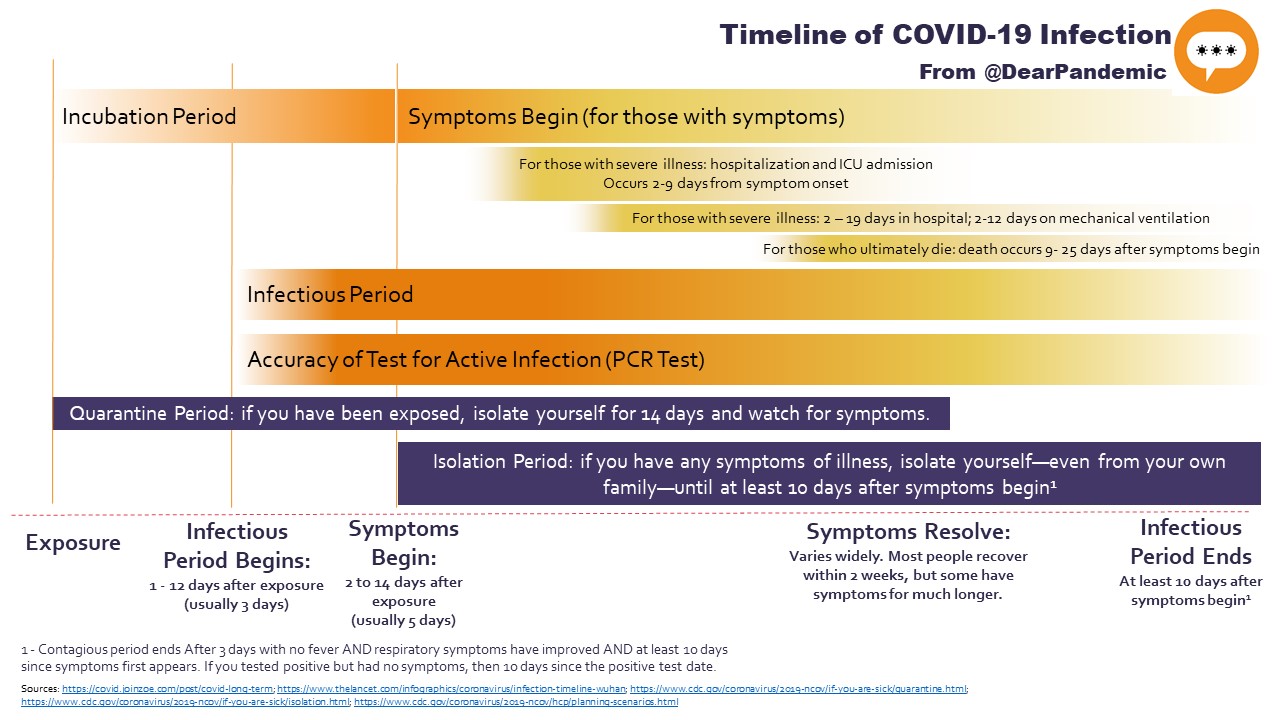
On the other hand research suggests that people who are infected with SARS-CoV-2 the virus that causes COVID-19 are at their most contagious in the 24 to 48 hours before they experience symptoms. Most people with symptoms had them by.

Quarantine And Isolation Thl
Coronavirus symptoms start about five days after exposure Johns Hopkins study finds The median incubation period of COVID-19 from exposure to the onset of symptoms is 51 days researchers say meaning the recommended 14-day quarantine period is a reasonable amount of time to monitor individuals for development of the disease.
. If you are exposed to someone who has COVID or may have COVID you will need to get tested. Wear a mask in public indoor settings for 14 days or until you get a negative test result. COVID-19 Patients May Be Most Contagious Soon After Infection. If you test too soon after exposure it can result in a false negative.
Testing immediately after exposure two. COVID-19 can spread from people to animals in some situations. People who are fully vaccinated and have ongoing exposure to COVID-19 should. Generally the answer is three to five days with a PCR test.
People with COVID-19 appear to be most infectious two days before to three days after symptoms start though its unclear whether this differs with Delta. People with COVID-19 appear to be most infectious two days before to three days after symptoms start though its unclear whether this differs with Delta. The time from virus exposure to. In one study on false negative rates after COVID-19 exposure researchers found that in the four days prior to symptom onset the probability of a false negative was extremely high on day one.
If you are vaccinated you should get tested 5 to 7 days after you were exposed. Rarely symptoms appeared as soon as 2 days after exposure. Food and Water Food. Learn what you should do if you have pets.
This of course. Learn more about what you can do to protect yourself and others and what you can do after youve been fully vaccinated. But symptoms normally appear within four or five days after exposure. Shira Doron of Tufts Medical Center said the classic definition of exposure to COVID-19 is when youve been within six feet of a person in the contagious stage of infection for at least 15.
If we figure that infected people who become. Wear a mask in any indoor public setting starting as soon as you find out you were exposed and continue doing so until you get your test results. Symptoms will typically develop during this week around 45 days after exposure. JAMA Intern Med 2020 May 1.
The probability of a false negative on day four was around 67. They typically became infectious able to transmit the virus to others during the 48 hours before they became symptomatic or tested positive. There is no evidence to. On average symptoms showed up in the newly infected person about 56 days after contact.
Prior reports have described transmission of SARS. According to the CDC if you develop symptoms of COVID-19 you should isolate yourself for at least 10 days after symptoms begin and until you have had no fever for at least 24 hours. Numerous studies show that being vaccinated gives you an advantage when it comes to spreading COVID-19 if youre infected. This is because you could start to develop symptoms within two to 14 days after exposure and can still be contagious before you even develop symptoms Dr.
If you are fully vaccinated you should wait three to five days after exposure before getting a test. Theres an incubation period for COVID-19. By the 10th day after COVID symptoms begin most people will no longer be contagious as long as their symptoms have continued to improve and their fever has resolved. If youve been around someone with COVID-19 you may be contagious as early as two days after that exposure if you do become infected.
Daniel Kaul MD reviewing Cheng H-Y et al. People infected with the original form of the SARS-CoV-2 virus were mostly likely to develop symptoms andor test positive between five and six days after exposure to the virus. A person with COVID-19 is considered infectious starting 2 days before they develop symptoms or 2 days before the date of their positive test if they do not have symptoms. Harvard Health studies have found that you are most contagious in the early stages of the disease but you probably remain contagious for at least 10 days after you start to experience symptoms.
In a study of 100 index cases no secondary transmission was observed among close contacts whose exposure started 6 days or more after cases developed symptoms. If youve been fully vaccinated. There has been a lot of confusion about breakthrough COVID-19 infections recently what it means to test positive after being fully vaccinated what the risk for developing long COVID is and how vaccinated people can spread the coronavirus. If someone is infected with Covid they may start to become contagious.
Get tested 5-7 days after their first exposure. Then follow the directions below. But you would still expect there to be a few days between the time a person is exposed and infected and the time they begin actively shedding virus. People who test positive for the virus but never develop symptoms over the following 10 days after testing are probably no longer contagious but again there are documented exceptions.
If its been at least two weeks since your final or single vaccine dose you should get tested three to five days after your exposure even if you dont have symptoms. Evidence suggests that testing tends to be less accurate within three days of exposure. What you want to know is how long it takes before an infected person will have a positive test. It can take almost a week after exposure to COVID-19 to have a positive test result.
Pet cats and dogs can sometimes become infected after close contact with people with COVID-19. COVID-19 is most contagious in the first week after exposure to the virus. Now a new study co-led by a School of Public Health researcher has found that individuals infected with the virus are most contagious two days before. If youre unvaccinated you should get tested right away as soon as you learn that you were exposed.
A study co-led by a researcher from the Boston University School of Public Health found that those whove been infected are most contagious two.

Hertfordshire County Council Understanding The Coronavirus Incubation Timeline Can Help Us Slow The Spread Of The Virus Take A Look At Hannah S Journey To Get A Better Picture Of How Long

How Does Covid 19 Typically Progress A Timeline For Majority Of Cases Daily Sabah

Dear Pandemic For Today S Throwbackthursday We Revisit A Post From May 4th About The Timeline Of Infection Q What Is The Timeline From Exposure To Viral Shedding To Symptoms When Do

Covid 19 How Long Does It Take To Get Sick How Long You Re Infectious When You Can Go Outside
:quality(70)/cloudfront-us-east-1.images.arcpublishing.com/cmg/SJBFMZ4BDRB6JG3IUNXPWGRURA.jpg)
Coronavirus How Long Between Exposure To The Virus And The Start Of Symptoms How Long Are You Contagious Fox23 News

How Long Am I Contagious Covid 19 Vs Flu Vs Common Cold

Posting Komentar untuk "how quickly after exposure to covid are you contagious"